If you have followed the news at all over the last decade, you have undoubtedly heard
terms like Bitcoin, Ethereum, and Blockchain. But what exactly is cryptocurrency, and
why is it causing such a massive shift in the global financial landscape?
At its core, a cryptocurrency is a form of digital or virtual currency that relies on cryptography for
security. Unlike traditional currencies like the US Dollar or Euro, cryptocurrencies are completely
decentralized, meaning they are not issued or regulated by any central authority, bank, or government.
How Does Cryptocurrency Work?
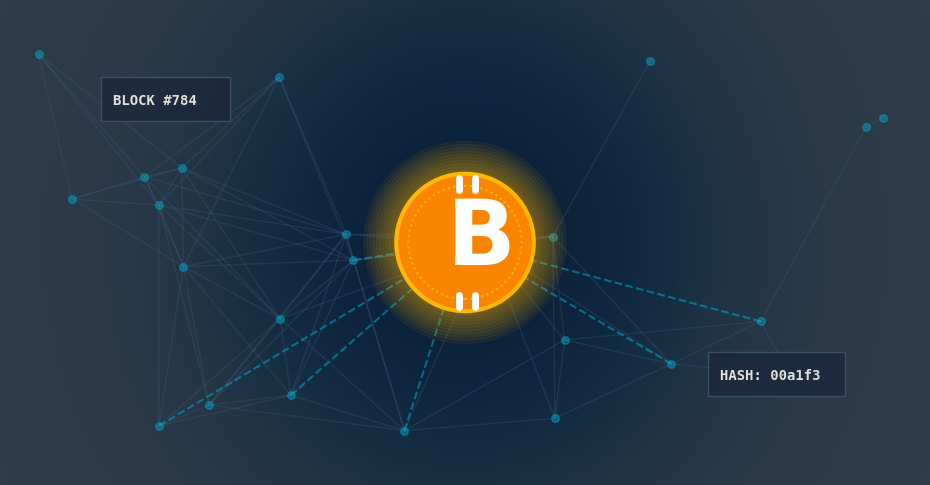
To understand cryptocurrency, you must understand the technology that powers it: Blockchain. A
blockchain is a distributed, public ledger that records all transactions across a massive network of
computers. Every transaction is grouped into a "block" and securely linked to the previous one, forming a
chronological chain.
Instead of trusting a central institution to verify balances, the ledger is verified collectively by the
network's participants. This is typically achieved through consensus mechanisms like Proof of Work
(PoW) or Proof of Stake (PoS). For instance, the total supply of a token can be governed by a
mathematical algorithm rather than political decisions, ensuring predictable distribution models.
Key Concept: Why Cryptography?
The "crypto" in cryptocurrency comes from the advanced cryptographic techniques used to secure the
network. It ensures that transactions cannot be altered, balances cannot be faked, and funds can only
be spent by the person who holds the mathematical private keys.
Traditional Currency vs. Cryptocurrency
The primary distinctions between traditional money (Fiat) and decentralized digital assets can be
summarized by examining their control structures, transparency, and transaction mechanisms:
Traditional Fiat Money
Issued and regulated by governments.
Centralized control (Banks can freeze
accounts).
Infinite supply potential (Inflation via
printing).
Requires local or regional intermediaries.
Cryptocurrency
Governed by code and decentralized
networks.
Peer-to-peer (Users have absolute
ownership).
Mathematically limited supply (e.g., 21M
Bitcoins).
Global, borderless, and operational 24/7.
Popular Examples of Cryptocurrency
Bitcoin (BTC): The pioneer, created in 2009 by an anonymous entity named Satoshi Nakamoto. It
acts primarily as a digital alternative to gold—a store of value.
Ethereum (ETH): Launched in 2015, it expanded on Bitcoin's concept by adding "Smart Contracts,"
allowing developers to build decentralized applications (dApps) directly on its blockchain.
Stablecoins (e.g., USDT, USDC): Cryptocurrencies pegged directly to stable traditional assets like
the US Dollar to minimize price volatility.
Pros and Cons: A Balanced View
While the potential of digital currencies is massive, they also introduce distinct risks that any participant
should understand before entering the space.
The Advantages: Cryptocurrencies lower transaction fees globally, eliminate processing intermediaries,
grant complete financial sovereignty to unbanked populations, and feature security architectures that
make hacking individual transaction records mathematically impossible.
The Disadvantages: Due to their speculative nature, values fluctuate dramatically. Regulatory
frameworks worldwide are still evolving, leading to sudden shifts. Furthermore, because there is no
customer support line, losing your private wallet key means losing your funds permanently.
The Bottom Line
Cryptocurrency is much more than just a passing trend; it represents a fundamental evolution in how
humanity conceptualizes trust, ownership, and value exchange. Whether it completely replaces paper
currency or coexists alongside it, decentralized blockchain technology has fundamentally changed the
financial world forever.